
 Pin it
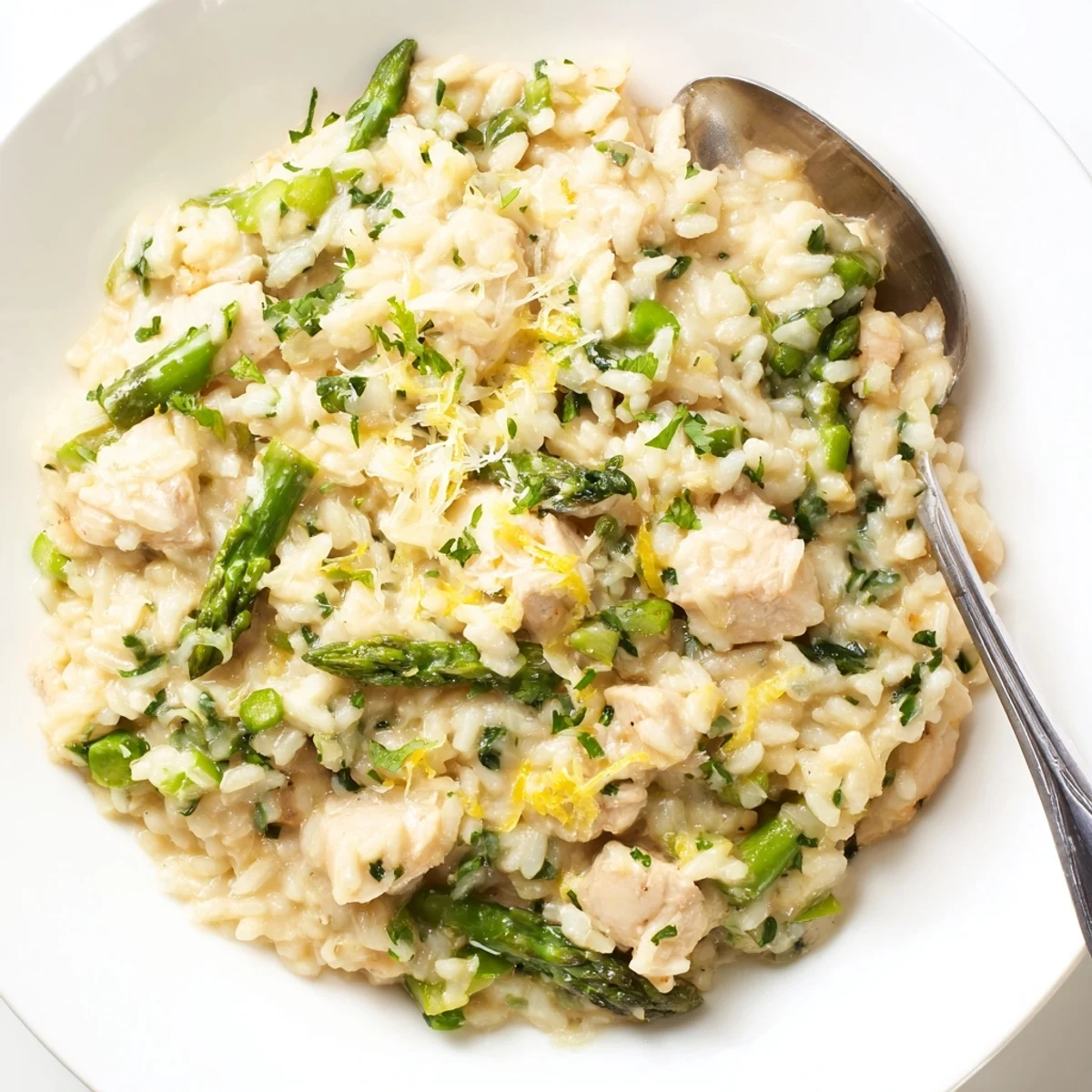
 This classic Italian dish transforms Arborio rice into a creamy, velvety texture through the traditional slow-cooking method. Tender diced chicken adds protein while fresh asparagus brings vibrant color and a subtle crunch. The dish gets brightness from lemon zest and richness from butter and Parmesan cheese. Ready in about 50 minutes, this risotto makes an elegant yet comforting main course that's perfect for weeknight dinners or special occasions.
The first time I attempted risotto, I stood at the stove for forty five minutes, convinced I had ruined it completely. My Italian neighbor later told me that risotto is supposed to demand your attention, that the stirring is part of the ritual. Now I actually look forward to those meditative minutes, watching the rice transform grain by grain into something luxurious.
Last spring, my sister came over exhausted from a new job and I made this while she told me about her day. By the time we sat down to eat, the conversation had shifted from stress to laughter, and she admitted this was exactly what she needed. Food has a way of doing that, of turning a random Tuesday into something that feels like a small celebration.
Ingredients
- 2 boneless skinless chicken breasts diced: Cutting the chicken into bite sized pieces ensures it cooks quickly and distributes evenly throughout the dish
- 1 tablespoon olive oil: This provides the foundation for searing the chicken before starting the rice base
- 300 g asparagus trimmed and cut: Fresh asparagus adds a welcome crunch and color that cuts through the rich creaminess
- 1 small onion finely chopped: The onion builds a subtle aromatic base that complements without overpowering
- 2 cloves garlic minced: Fresh garlic transforms the entire dish with its warm fragrant undertones
- 1½ cups Arborio rice: This specific rice variety is non negotiable, its high starch content creates that signature creamy texture
- 5 cups warm chicken stock: Keeping the stock warm prevents temperature shocks that can make the rice cook unevenly
- ½ cup dry white wine: The wine adds depth and acidity that balances the richness
- 3 tablespoons unsalted butter: Divided use of butter creates layers of savory richness throughout the cooking process
- ⅔ cup freshly grated Parmesan: freshly grated cheese melts beautifully and delivers superior flavor compared to pre grated versions
- Zest of 1 lemon: This bright finish transforms the dish from heavy to vibrant and memorable
Instructions
- Perfectly sear the chicken:
- Heat olive oil in your largest heavy saucepan over medium heat, season the diced chicken generously with salt and pepper, then cook until deeply browned and cooked through, about 5 to 6 minutes, removing it to a plate and leaving those flavorful drippings behind
- Build the aromatic base:
- In the same pan, melt 1 tablespoon butter and sauté the onion until it turns translucent and fragrant, about 3 minutes, then stir in the garlic for just 1 minute more until it becomes fragrant but not browned
- Toast the rice grains:
- Add the Arborio rice and stir constantly for 2 minutes, watching as the grains turn slightly opaque at the edges and develop a nutty fragrance that will deepen the final flavor
- Deglaze with wine:
- Pour in the white wine and stir until it completely disappears into the rice, leaving behind those concentrated flavors at the bottom of the pan
- The slow addition process:
- Add warm chicken stock one ladleful at a time, stirring frequently and waiting until each addition is fully absorbed before adding the next, continuing this meditative process for about 15 minutes as the rice releases its starch
- Add the asparagus:
- Stir in the asparagus pieces and continue adding stock gradually for another 10 minutes, until the rice is creamy yet still maintains a slight bite in the center and the asparagus is tender but still vibrant
- The grand finish:
- Return the cooked chicken to the pan, then stir in the remaining butter, Parmesan cheese, and lemon zest until everything is melded together, adjusting the salt and pepper to taste before removing from heat
- The resting moment:
- Cover the pan and let it rest for exactly 2 minutes, which allows the flavors to settle and the texture to become even more luxurious, then garnish with parsley and extra Parmesan before serving immediately
 Pin it
 My friend once said that making risotto is like a friendship, it requires patience and attention but the result is worth every moment spent stirring. This recipe has become my go to for celebrating small victories and comforting hard days alike.
Making It Your Own
While this combination of chicken and asparagus feels perfect in spring, the technique adapts beautifully to whatever season you are in. The real secret is understanding that risotto is more about method than specific ingredients.
Worth The Effort
Some nights when I am exhausted, I consider skipping the homemade risotto for something faster, but somehow those are always the nights I am most grateful I chose the slower path. There is something deeply satisfying about food that demands you slow down and stay present.
Serving Suggestions
A crisp white wine like Sauvignon Blanc cuts through the richness perfectly, though a light Pinot Grigio works beautifully too. I have found that keeping the sides simple lets the risotto truly shine.
- A simple green salad with bright vinaigrette balances the creaminess
- Crusty bread for soaking up every last bite is never optional
- The dish needs nothing more than good company and a relaxed table
 Pin it
 Risotto has taught me that some of the best things in life truly are worth the extra time and attention they demand.
Recipe Q&A
- → What makes risotto creamy?
-
The creaminess comes from Arborio rice, which releases starch as it slowly cooks and absorbs liquid. Constant stirring helps release this starch, creating the signature velvety texture without adding cream.
- → Can I use different vegetables?
-
Absolutely. While asparagus adds lovely flavor and color, you can substitute peas, spinach, mushrooms, or diced bell peppers based on season and preference.
- → Why should the stock be warm?
-
Adding warm stock prevents the rice from cooling down between additions, which helps maintain even cooking and prevents the rice from becoming gummy or unevenly cooked.
- → Is white wine necessary?
-
White wine adds acidity and depth of flavor. You can substitute with additional chicken stock, though the final dish will have a slightly less complex flavor profile.
- → How do I know when risotto is done?
-
The rice should be tender but still have a slight bite in the center (al dente), and the mixture should be creamy and flowing. If it's too thick, add another splash of stock.