
 Pin it
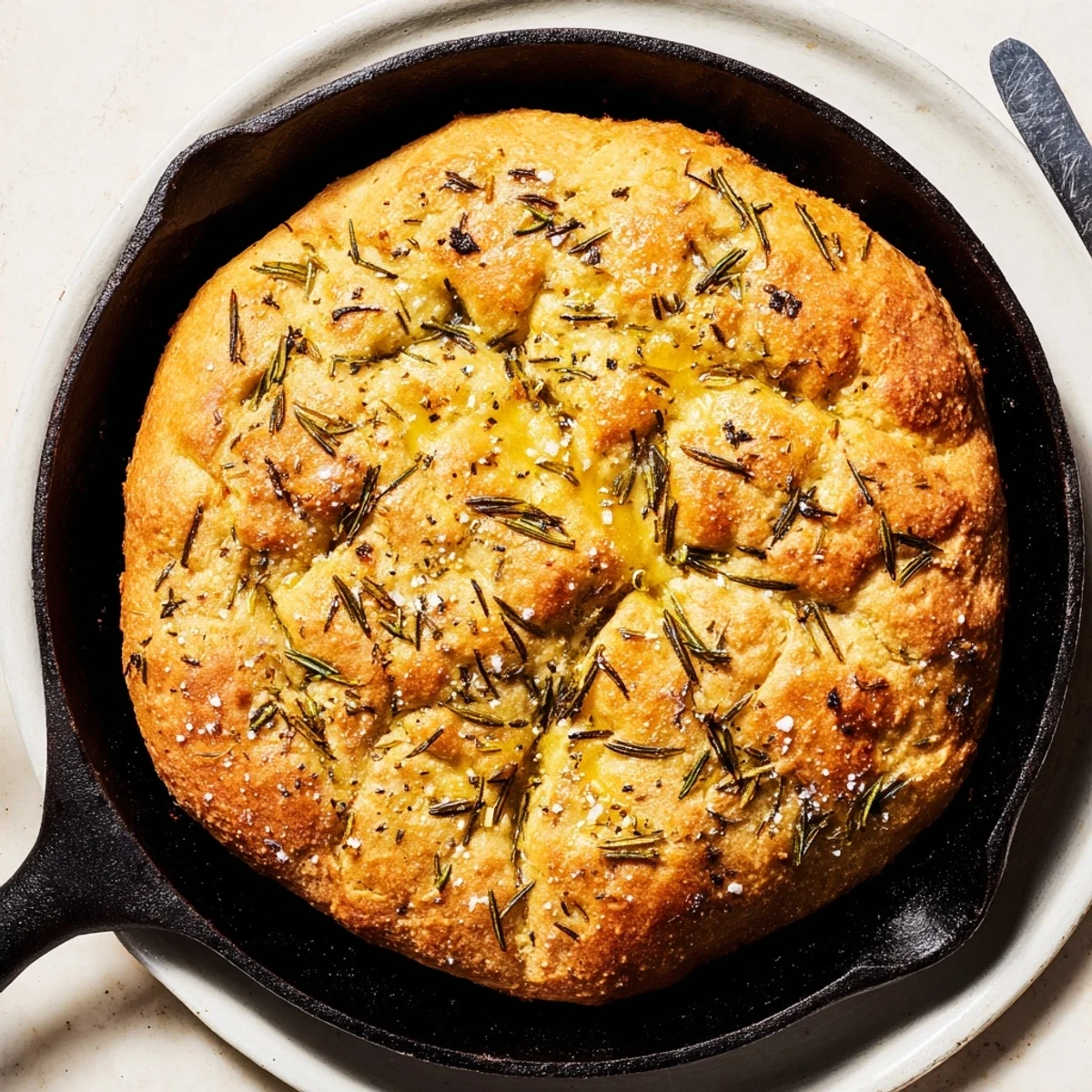
 Bring rustic European flavors to your table with this skillet-baked bread featuring aromatic roasted garlic and fragrant fresh rosemary. The dough achieves beautifully crisp edges while maintaining a tender, chewy crumb inside—ideal for dipping in olive oil or accompanying soups.
With just 15 minutes of active prep and simple ingredients, this hearty loaf rises to golden perfection in your cast iron skillet. The finished bread delivers warm, savory herb notes that make it perfect for sharing.
The winter my apartment radiators clanged and hissed, I started making bread just to feel something warm. This skillet bread became my Friday ritual, the garlic and rosemary filling every corner of my small kitchen while snow piled up outside windows.
My friend Sarah stayed over during that particularly brutal February, and we tore through half a loaf straight from the skillet, standing over the stove with butter dripping down our wrists. She still texts me every time she smells rosemary, asking when Im making another batch.
Ingredients
- Bread flour: Higher protein content than all-purpose gives this bread structure and that satisfying chewy crumb
- Active dry yeast: Make sure your water feels like bath temperature, around 105°F, anything hotter kills the yeast
- Fresh rosemary: Dried herbs work in a pinch but fresh releases oils into the dough that perfume your entire kitchen
- Garlic: Raw garlic mingles beautifully as it bakes, mellowing into sweet undertones rather than harsh bite
- Flaky sea salt: Maldon or similar adds that restaurant finish and sparkly texture that regular salt cant achieve
Instructions
- Wake up the yeast:
- Stir yeast into warm water, then walk away for five minutes, letting it bubble and foam like a tiny science experiment
- Build the dough:
- Add flour and salt, mixing until shaggy and rough, then knead until the dough transforms into something smooth and slightly tacky
- Add the magic:
- Drizzle in olive oil, rosemary, and garlic, kneading just enough to distribute everything evenly
- Let it rise:
- Cover the bowl and leave it alone somewhere warm, letting it double in size while you do other things
- Prep the skillet:
- Coat your oven-safe skillet generously with oil, then press the dough in gently toward the edges
- Second rise:
- Cover and let the dough puff up again, about 25 minutes, while you preheat your oven to 425°F
- Finish and bake:
- Brush with remaining olive oil, scatter flaky salt across the top, then bake until golden and cooked through, 30 to 35 minutes
 Pin it
 This bread has seen me through dinner parties where everything else went wrong, through breakups, through celebrations. Something about putting dough in a skillet and watching it rise against all odds makes everything feel possible again.
Choosing the Right Pan
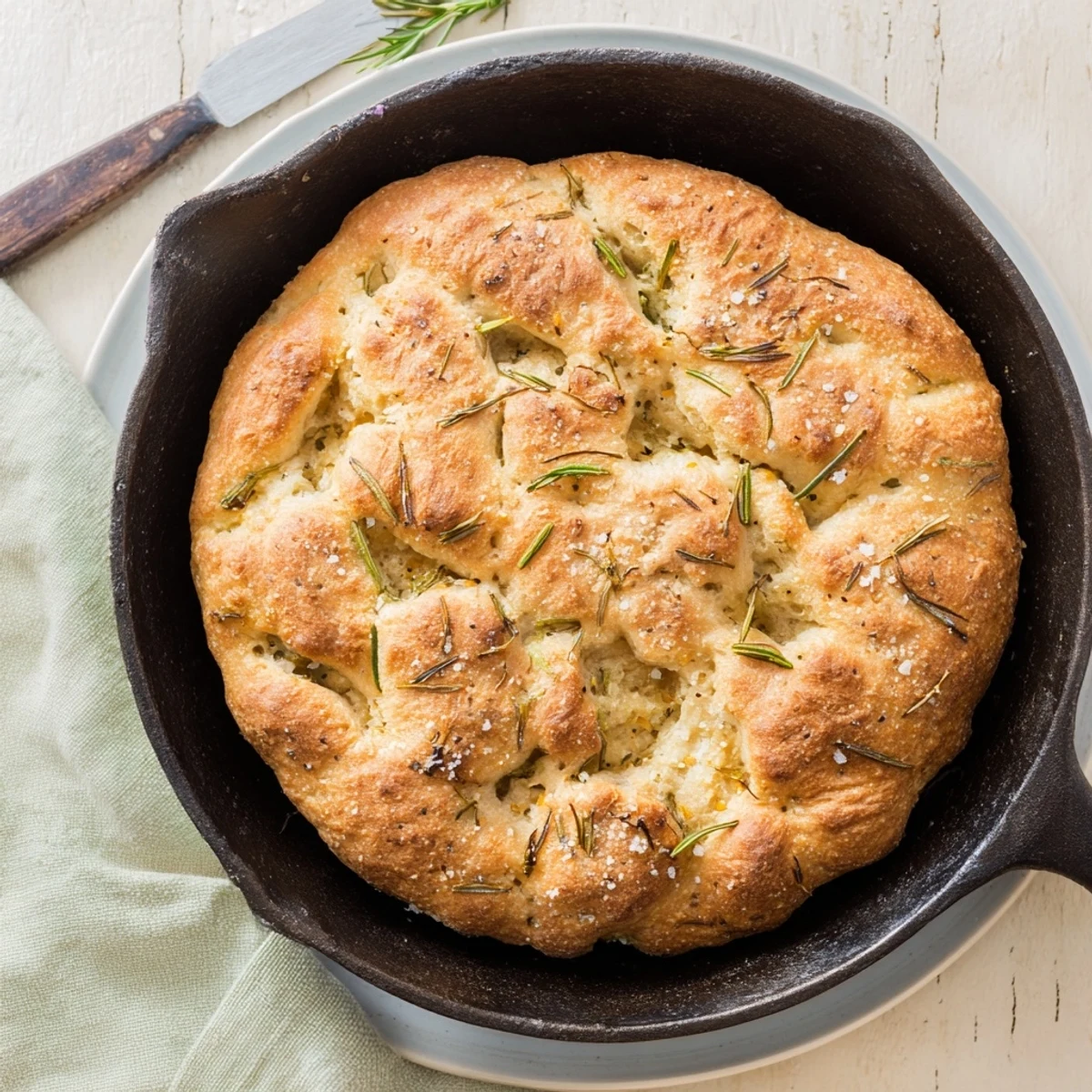
Cast iron skillets are ideal for even heat distribution and that incredible bottom crust, but any oven-safe pan will work in a pinch. The heavier your pan, the better your crust will turn out.
Make It Your Own
Swap rosemary for thyme or sage depending on the season, or add shredded sharp cheddar to the dough for a savory twist. The recipe is forgiving and welcomes experimentation.
Serving Suggestions
This bread shines alongside hearty soups and stews, or simply torn into pieces with good olive oil for dipping. It also makes excellent next-day toast, fried until golden in butter.
- Slice leftovers thick and grill them for panini sandwiches
- Cube stale bread and toast with herbs for homemade croutons
- Wrap cooled bread well and freeze for up to a month
 Pin it
 Theres something profoundly satisfying about bread you made yourself, the way it fills your home, the way people gather around it. May your kitchen always smell like rosemary and possibility.
Recipe Q&A
- → What makes skillet bread different from oven-baked loaf?
-
Skillet bread bakes with direct heat contact from the cast iron, creating extra crisp edges and a golden crust while keeping the interior tender and chewy.
- → Can I use dried rosemary instead of fresh?
-
Fresh rosemary provides the best fragrance, but you can substitute 1 teaspoon dried rosemary. Add it early with the flour to help rehydrate and release flavor.
- → How do I know when the bread is done baking?
-
The bread is ready when the top is deep golden brown and sounds hollow when tapped. An instant thermometer inserted into the center should read 190-200°F.
- → Can I make this without a cast iron skillet?
-
A 10-inch oven-safe skillet works well. Light-colored aluminum may require slightly longer baking time. Avoid glass as it conducts heat differently.
- → Should I roast the garlic first?
-
Raw garlic works beautifully, but roasting cloves until soft adds deeper, sweeter flavor. Simply mince roasted cloves and fold into the dough during mixing.
- → How should I store leftover bread?
-
Wrap cooled bread tightly in plastic or store in an airtight container for up to 2 days. Reheat slices in a 350°F oven for 5 minutes to refresh crispness.